
Work
What we found. What we did. What it returned.
Every case is written the way we report to clients’ boards: what we found, what we did, and what it returned. The figures are as reported.
CarPrices.ae
A UAE vehicle-pricing and research platform whose valuable content was held back by limited search visibility, a constrained WordPress build and an under-developed content architecture.
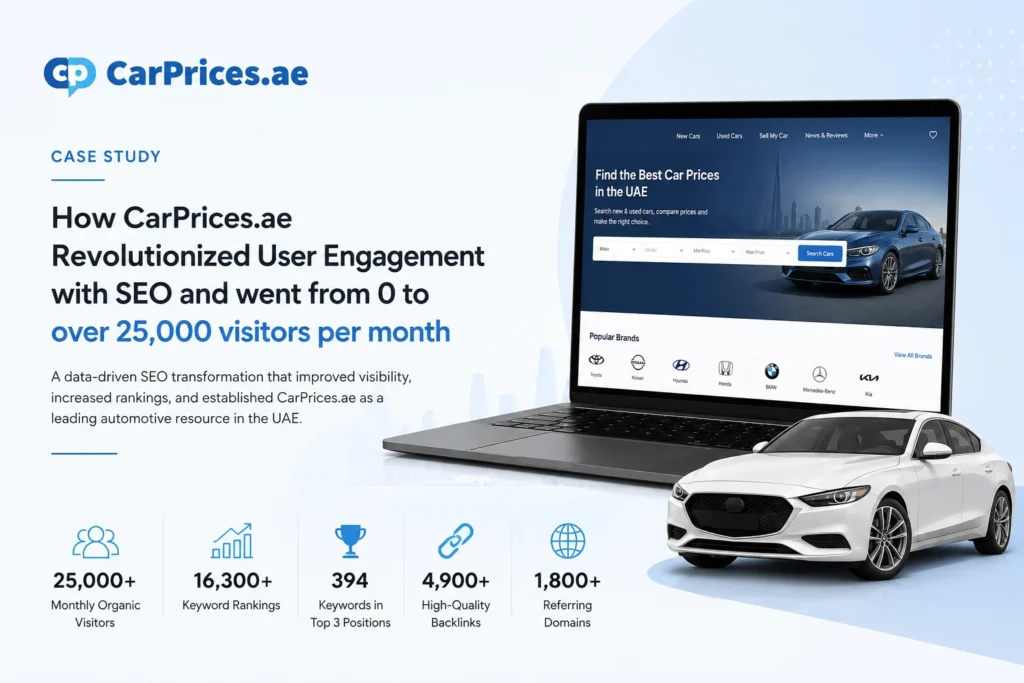
A technically constrained WordPress build with low search visibility, weak content hierarchy and internal linking, content gaps, and a backlink profile carrying quality risk.
Migrated to Next.js, rebuilt navigation and internal linking around automotive topic clusters, mapped search demand into a programmatic content architecture, and ran a quality-focused authority programme.
More than 25,000 monthly organic visitors, 16,300+ ranking keywords and 394 top-three positions. Search became a scalable acquisition channel rather than a set of isolated fixes.

AVATR UAE
A premium electric-vehicle marque entering a crowded UAE market, needing awareness and credibility without weakening its position through price-led communication.
An unfamiliar marque entering a crowded premium market, with fragmented discovery across search, AI answers, social and video, and a need for lead volume that would not dilute quality.
Built premium positioning around technology, design and sustainable mobility, optimized for search and answer-led discovery, and connected YouTube launch reach to Google, Performance Max, Display and Meta.
12M+ YouTube launch impressions and more than 300 leads a month at a 68%+ qualification rate: reach and sales-ready demand, with the premium position intact.
Hala Heavy Equipment
A heavy-equipment distributor with decades of market credibility but limited digital visibility and no consistent online enquiry engine.
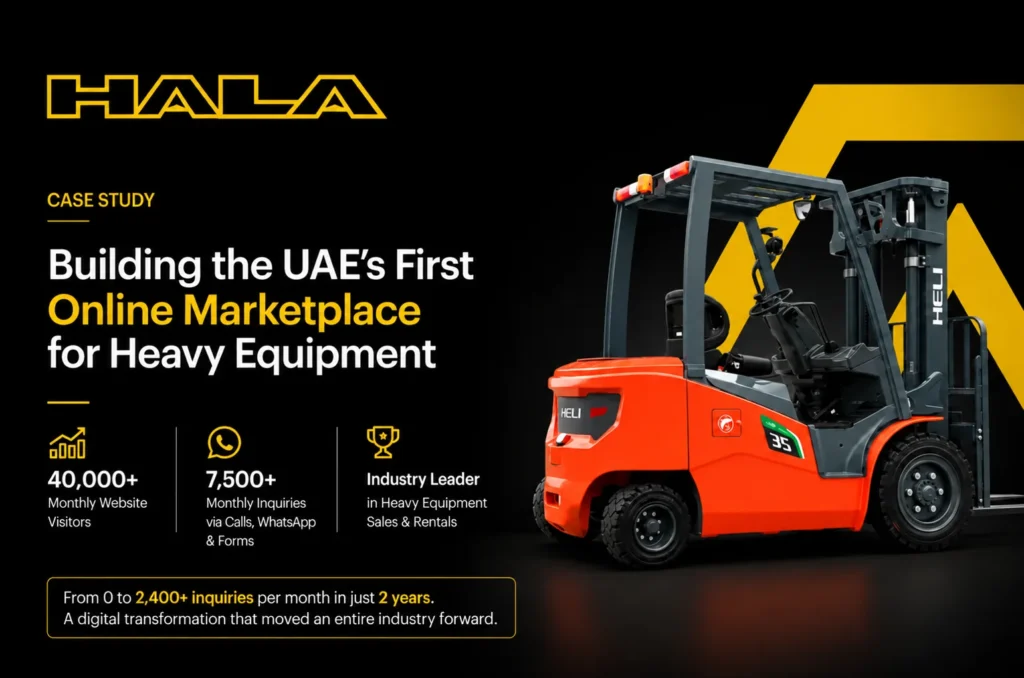
A respected offline distributor with minimal search visibility and no consistent online enquiry flow, a broad catalogue with no digital structure, and buying journeys needing several routes to contact.
Built the UAE's first dedicated marketplace for forklifts and heavy equipment, an SEO framework around product, rental and category demand, and multi-channel campaigns feeding phone, WhatsApp and form conversions.
More than 40,000 monthly visitors and an average of 7,500 enquiries a month across WhatsApp, calls and forms. Digital acquisition became part of the sales infrastructure.
Ring
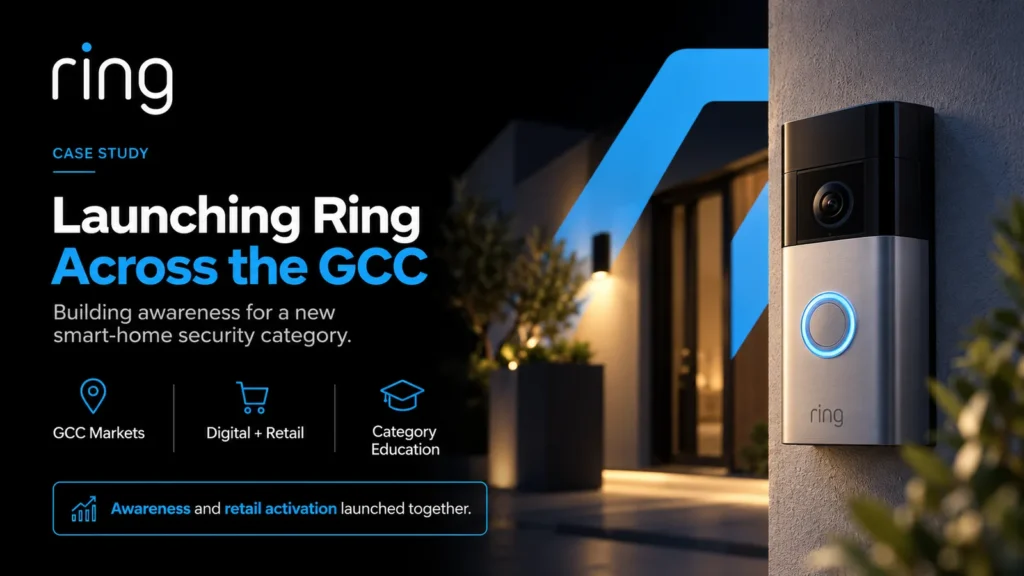
Ring entered the Gulf with strong global recognition and a category most buyers in the region had never shopped before. The launch had to build the category and the brand at the same time, on screen and on the shelf.
A globally recognised brand entering a category most Gulf buyers had never shopped, against established consumer-electronics competition already holding retail attention.
Built the launch around category education, ran digital campaigns across the funnel, and backed them with retail activation so demand created online met the product in person.
A GCC launch that established the brand and the category together, with digital reach and physical availability arriving in step rather than in sequence.
Duckhams Lubricants
Duckhams arrived in the UAE with a century of British motoring history and no local shelf presence. The brand needed awareness with drivers, trust with workshops, and distribution with the trade, all at once.
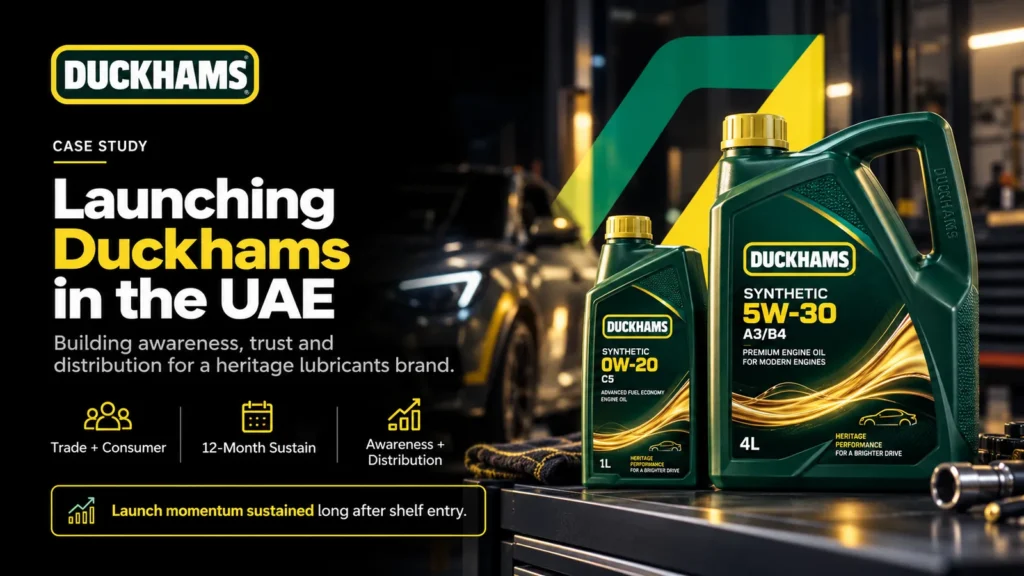
A heritage British brand with no UAE shelf presence, needing awareness with drivers, trust with workshops and distribution with the trade, none of which could wait for the others.
Launched across trade and consumer audiences in parallel, built the case on the brand's motoring heritage, and sustained it with twelve months of ongoing awareness and branding.
Progress on the commercial measures that matter for a new entrant: distributor sign-ups and retail listings, supported by a brand drivers had begun to recognise.
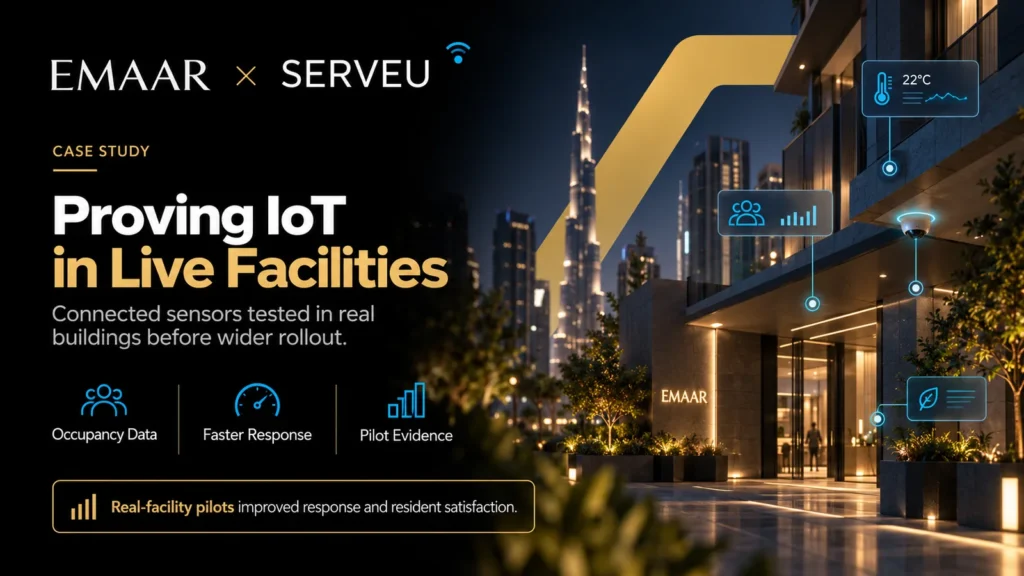
Emaar and ServeU
Emaar and ServeU wanted to know what connected sensors could actually do for their buildings before committing to a rollout. The work was concept, pilot and proof, not a deployment.
Facilities teams finding out about problems when residents reported them, no consistent measurement of occupancy, footfall or facility status, and no evidence base for whether sensors would change either.
Planned the IoT concepts around what facilities teams needed to know, designed and ran pilots in selected live facilities, and delivered a proof of concept rather than a demonstration.
Improved response times and customer satisfaction within the pilot, and the evidence Emaar and ServeU needed to judge a wider rollout on their own buildings rather than a supplier's claims.
Trump International Golf Club
A premium golf club selling memberships to a small, discerning audience, where the brand has to be visible and the enquiry has to be worth the sales team's time.
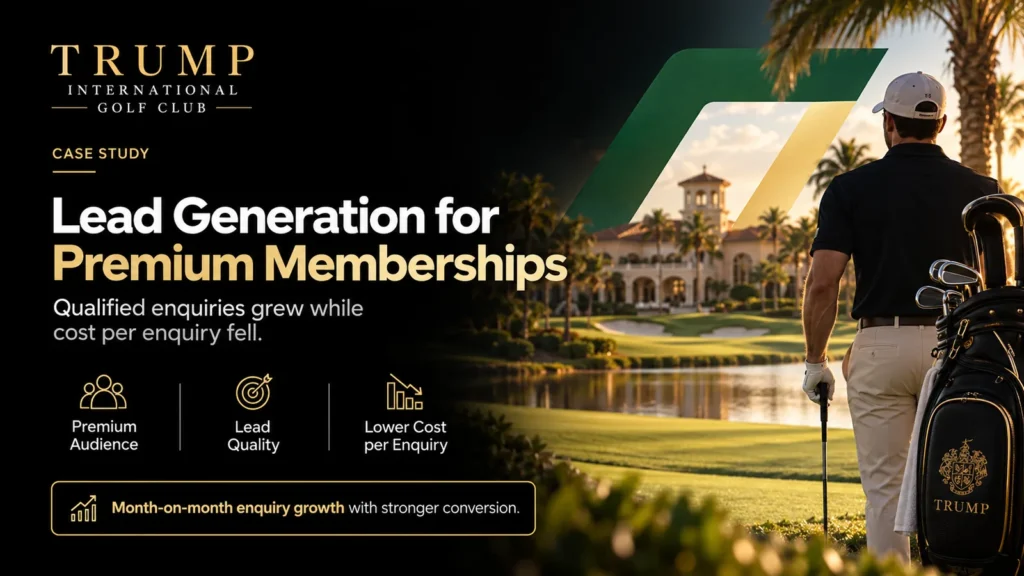
A premium membership sold to a small, considered audience, where volume tactics cheapen the brand and an enquiry only counts if the sales team can convert it.
Ran awareness and lead generation as a single programme across digital touchpoints, built qualification into the targeting, and managed the whole thing against cost per enquiry.
Membership enquiries growing month on month at a falling cost per enquiry, converting to membership above the club's average rate.

Royal Enfield
Royal Enfield came back to the UAE with a new distributor and very little awareness to build on. Motorcycles are bought after they are ridden, so the relaunch had to move people from a screen to a saddle.
A respected motorcycling marque with very low UAE awareness, relaunching under a new distributor, in a category where a purchase follows a ride rather than an advert.
Rebuilt awareness across digital channels, designed the campaigns to drive a showroom visit or a test ride, and backed them with events and organised rides.
Awareness built from a very low base and converted into the measures the distributor cared about: showroom footfall and test rides.
Your funnel, written up the same way
The free audit reads exactly like these cases: what we found, what we’d do, what it should return. Yours to keep either way.